

Before Napa, There Was a Boat Leaving Spain
A vine, a question I couldn't stop pulling on, and the five-century journey that built California wine.

This week, we turn back to the Vine and step onto a boat crossing from Spain to Mexico, headed for a land not yet called California.
I’m excited to tell this story. To call you to the table, to circle up and listen together. Their story, our story. I’m waiting for the questions, the interruptions, the surprise. If you're a curious human like me, this one is for you.
I have a habit of being drawn to the question underneath things. And this week, I’ve been following a vine. Literally. A five-century journey of a single grape, the way it feels to pull on something and find it leads somewhere unexpected.
From a sun-scorched plain in the heart of Spain, onto a ship, across an Atlantic Ocean, into the desert of Mexico, and out in two directions — south through Peru and Chile and over the Andes into Argentina, north through Baja California and into the soil of San Diego in the summer of 1769. A single grape variety. Five centuries. Four continents. And a story that turns out to be the foundation of everything California wine became. And everything it nearly lost.
Let me show you what I found.

257 Years: Spain, Mexico, and the Vine That Crossed an Ocean: Part Two.
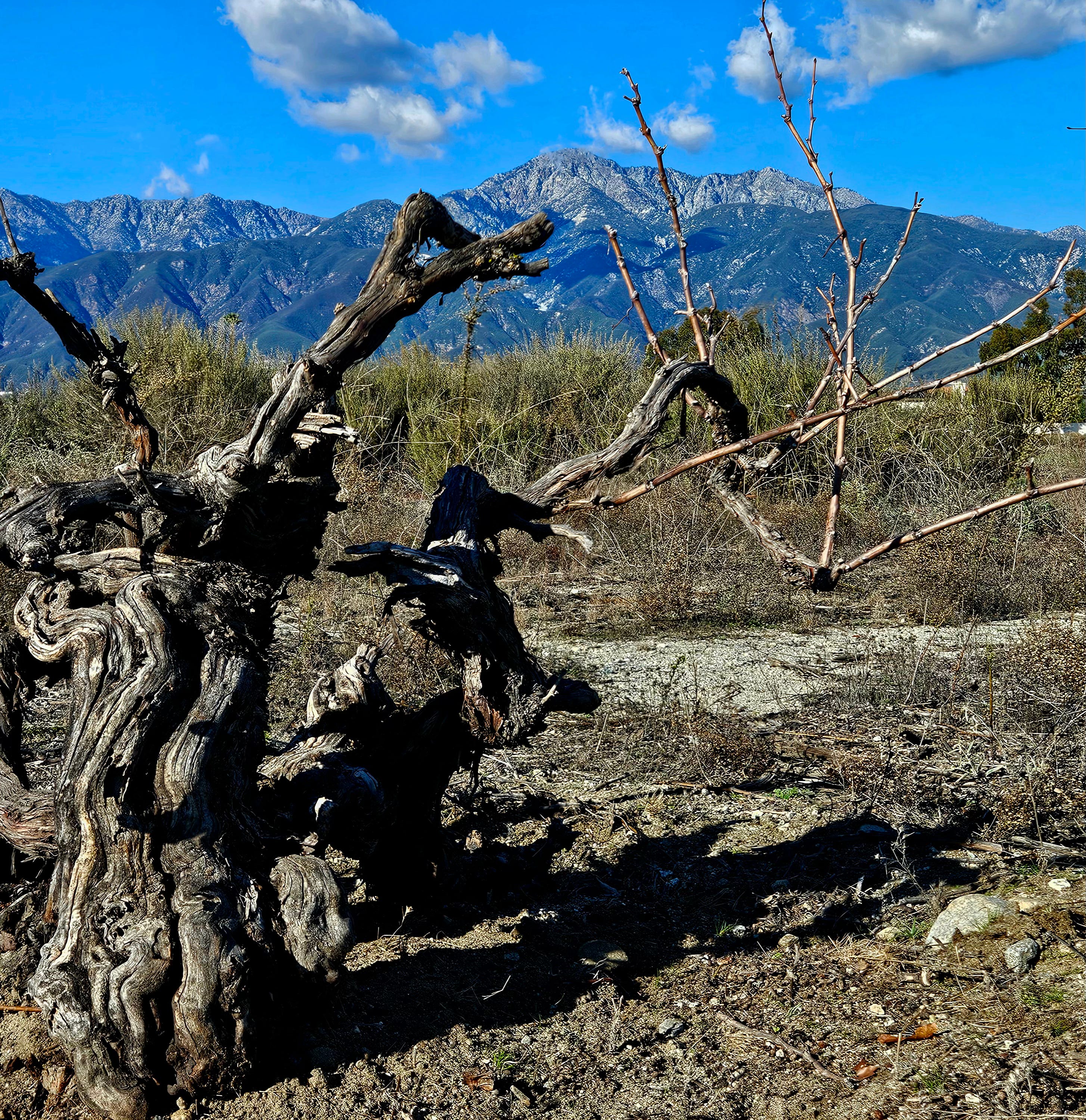
There are vines in Cucamonga, California, right now that are over 100 years old.
Most people drive past them on the 10 freeway without knowing they’re there. The land looks like everything else in the Inland Empire — dry, sprawling, squeezed between warehouses and subdivisions. But those old vines are still in the ground. Still producing.
And a winemaker named Rajat Parr — one of the most respected in California — co-founded a wine company called Scythian, named after the ancient nomadic warriors of the Eurasian steppe. The vineyards Scythian works with, the company says, have “defied all odds to remain rooted in the ground.” The goal: to tell their stories in the glass once more, and to safeguard California wine history before it disappears.
Here’s the thing about those vines.
They didn’t start in Cucamonga.
They started in Spain.

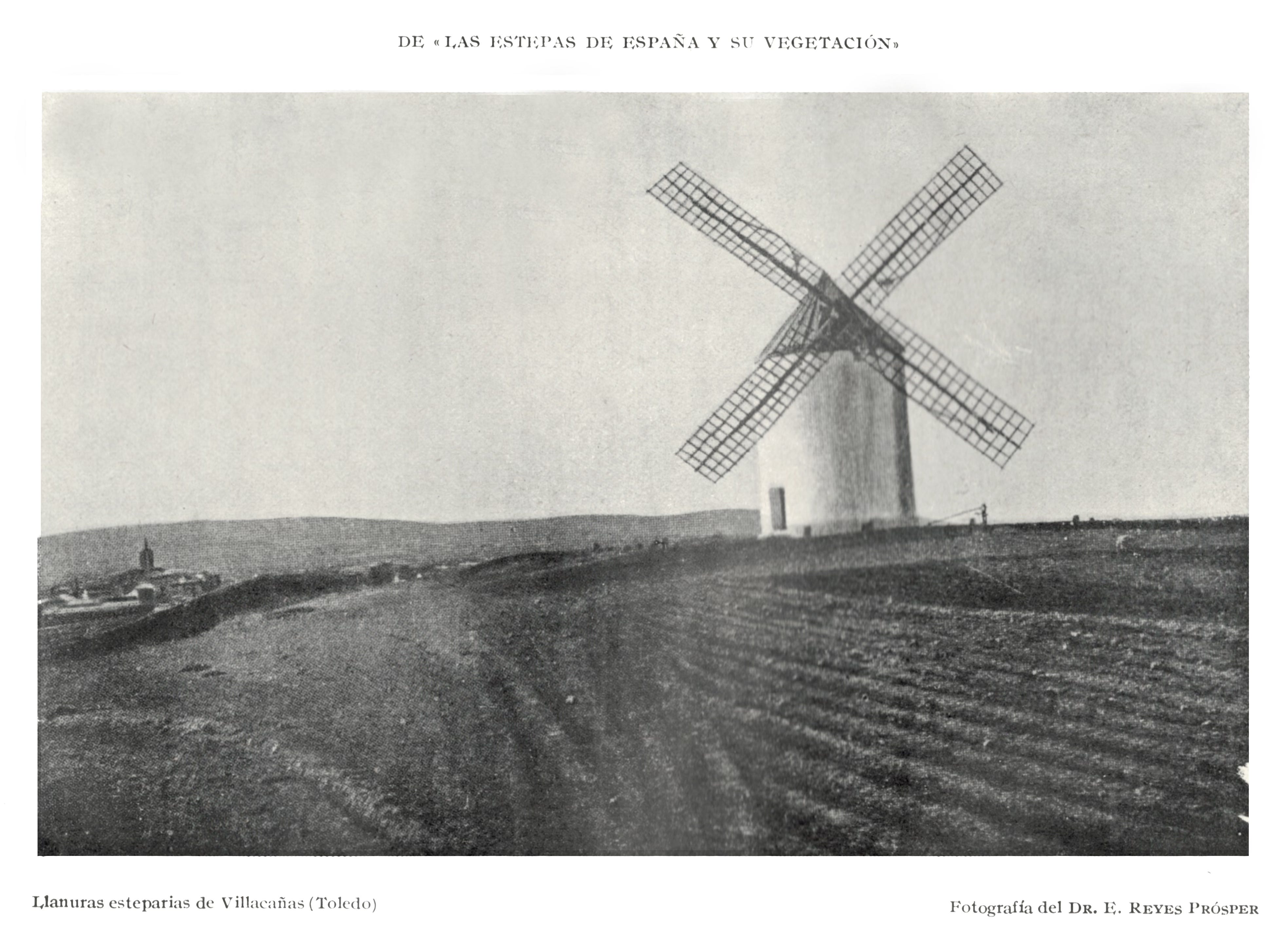
Castilla-La Mancha. Early 1500s.
Flat and relentless — a high plateau in the geographic heart of Spain, the land Cervantes chose for Don Quixote because it embodied a particular stubbornness, a refusal to be defeated by hostile conditions. Brutal summers. Hard winters. Soil as pale and thin as bone.
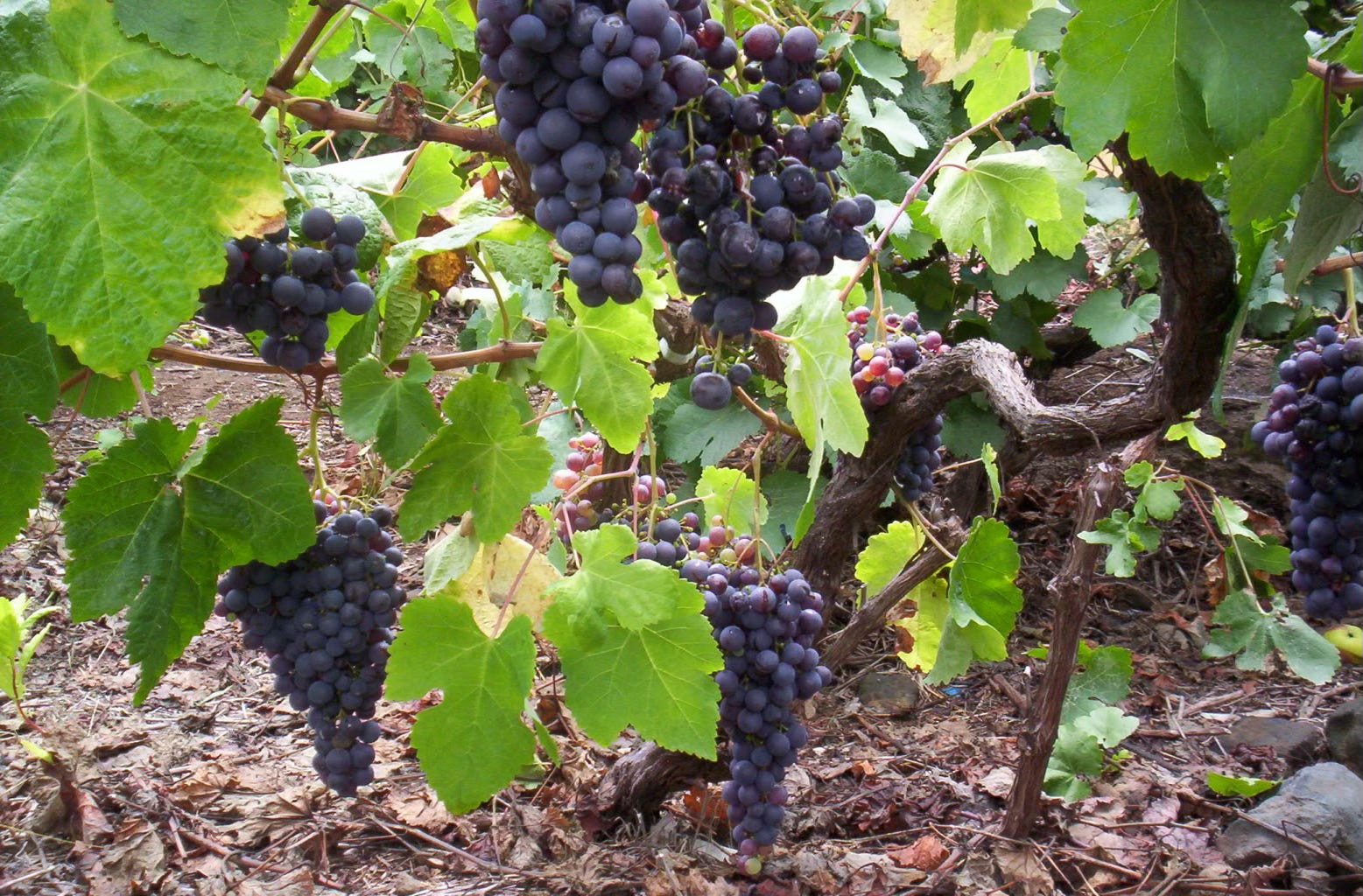
The grape grown here was called Listán Prieto. Dark-berried, drought-resistant, relentlessly productive. Not a grape of celebrations or courts. A workhorse — valued for toughness and yield, for surviving what would kill a more delicate vine.
In the 16th century, Listán Prieto was carried from Castilla-La Mancha to the Canary Islands — those volcanic islands rising from the Atlantic off the northwest coast of Africa, the last landfall before the open ocean.
The Canary Islands were the crossroads of the known world. Every Spanish ship heading to the Americas stopped there: water, food, livestock, seeds. And vines. Living cuttings, wrapped carefully, tucked into the hold, carried west toward a continent that had never tasted European wine.
The vine went with the ships.

Mexico. 1524.
Hernán Cortés had just finished conquering Tenochtitlan. He was building a new civilization on the ruins of the old one — and he understood that civilization required wine. For the Church. For the settlers. For the fundamental European belief that to plant a vineyard was to plant permanence.
So he issued a decree. The Ordenanzas de Buen Gobierno — the Ordinances of Good Government, dated March 20, 1524. Among its mandates: every holder of an indigenous labor grant was required to plant 1,000 vine shoots for every 100 people under their care annually. The ultimate goal was 5,000 vines per 100 inhabitants. Penalties for non-compliance.
The vine was not optional. It was the law.
The grape they planted was Listán Prieto, carried from the Canary Islands. In Mexico, it became known simply as the Mission grape. For nearly a hundred years, it remained — and quietly began to change — in the hands of farmers, friars, and Indigenous laborers across New Spain.
From Mexico, the grape moved in two directions. South, with Spanish missionaries and conquistadors, into Peru by the 1550s, Chile by 1554, and across the Andes into Argentina, where it took on new names: Negra Corriente, País, Criolla Chica. Same vine, different soils, different stories.
But before it moved north, it found shelter.
In 1597, in the desert of Coahuila, Franciscan friars founded the Mission of Santa María de las Parras, in a valley ringed by mountains, fed by underground springs, protected from the raids that would devastate vineyards further north. They found wild vines already growing there. Calcareous soils that suited the Mission grape. They planted. They made wine.
That mission site is where Casa Madero stands today — the oldest continuously operating winery in the Americas. Nearly 430 years of unbroken production, from one valley in the Mexican desert.
The vine had found its first real home in the New World.

The Road North.
From Parras, the Mission grape moved steadily up the spine of New Spain — on mules, in the hands of Franciscan friars, following the mission system northward through New Mexico, Texas, and Baja California.
In 1697, Juan María de Salvatierra planted vines at the Loreto Mission in Baja California, beginning a chain of plantings that would eventually reach Serra in San Diego, seventy-two years later.
The vine moved the way all important things move — slowly, carried by people with purpose, planted wherever those people stopped long enough to believe the place might hold.

San Diego. July 16, 1769.
Father Junípero Serra — 55 years old, traveling on a chronically infected leg so painful he had to be lifted onto a mule for parts of the journey — raised a cross on Presidio Hill above a bay on the Southern California coast, said Mass, and founded Mission San Diego de Alcalá.
The first European settlement in Alta California. The first of twenty-one missions.
In the weeks that followed, they planted the Mission grape.
The vine arrived in San Diego with a force that wasn’t only spiritual. The mission system Serra founded depended on the labor — often forced — of the Kumeyaay people whose land it occupied. The grape that crossed an ocean to reach this soil was planted, pruned, and harvested by people who were largely forbidden from drinking it. That story will run alongside this one for the rest of the series.
By 1771, Serra had moved north to found Mission San Gabriel Arcángel, just east of what is now Los Angeles. The vines planted there — what came to be called the Mother Vine, or the Ramona Vine — are still alive. Over the centuries, the Mission grape at San Gabriel crossed with Vitis girdiana, the native Southern California grape, becoming a hybrid that exists nowhere else on earth. The Spanish vine had married the California one.
In 2020, a fire destroyed much of the Mission’s roof and many of its priceless artifacts. The Los Angeles Vintners Association — a small group of winemakers working to revive the city’s lost winemaking tradition — harvested grapes from the surviving historic vineyard and made a half-barrel of Angelica, the fortified dessert wine historians consider the first true California wine.
One of the winemakers said it tasted like cherry cordial. A flavor profile, he said, unique in the world.
The Mission grape spread up the California coast — San Luis Obispo, Santa Barbara, Carmel, and San Francisco. Twenty-one missions, and at each one: a vineyard. By the early 1800s, Mission San Gabriel alone was producing tens of thousands of gallons of wine and brandy annually, supplying other missions, settlers, and trade routes along the Pacific coast.
And it centered on Los Angeles. The city that would become the original wine capital of California — the story we’ll tell in the next installment of this series.

Which brings us back to Cucamonga.
The old vines that Scythian Wine Company is working with today — those hundred-year-old survivors along the 10 freeway — they are the direct descendants of what Serra planted. The Mission grape’s lineage runs through them. The story that began in Castilla-La Mancha crossed the Atlantic, survived the desert of Mexico and the long road north through Baja California, and arrived here. In this soil. And somehow stayed.
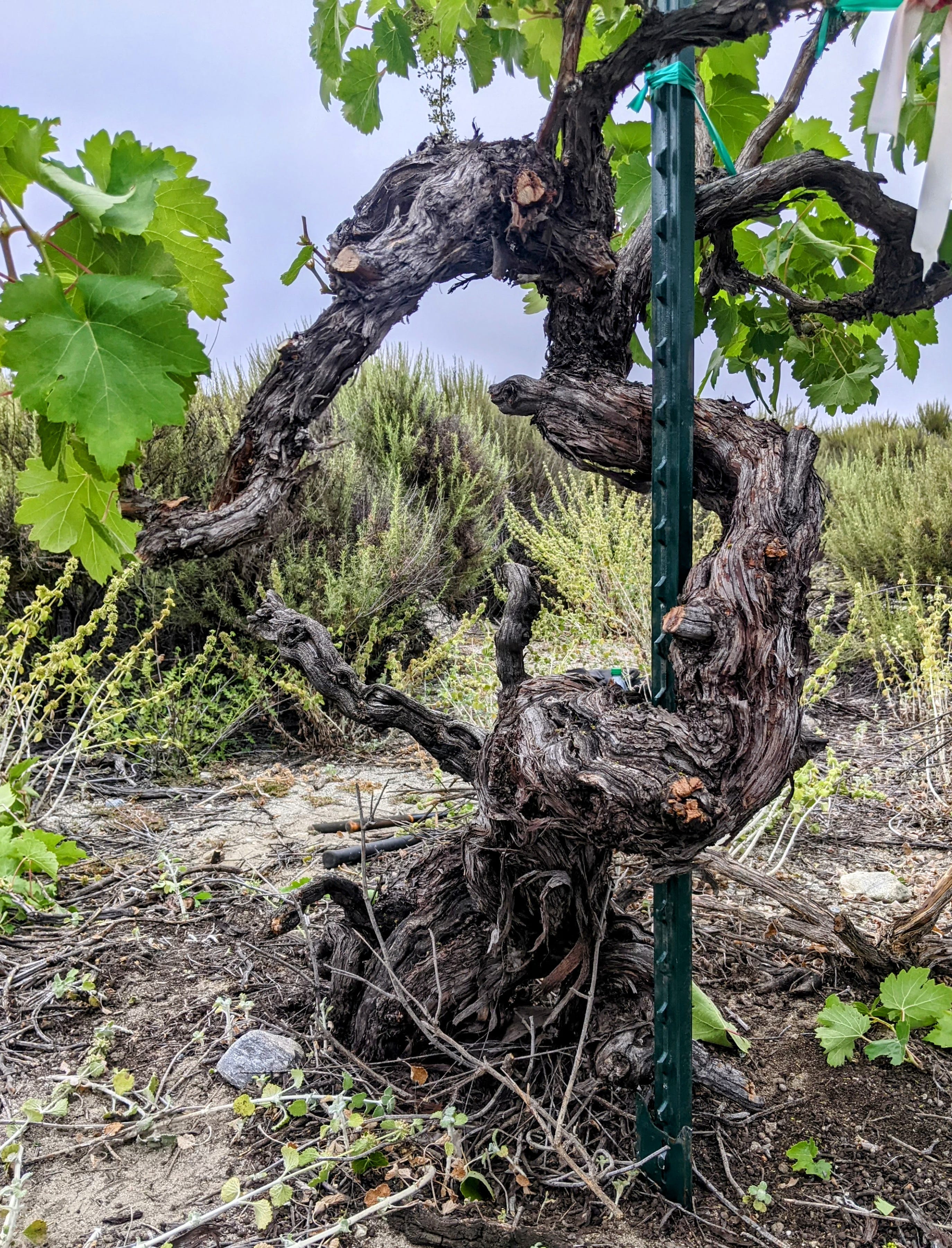
Enough clonal variation occurred over centuries of geographical separation that the Mission grape of the Americas and the Listán Prieto of the Canary Islands now grow as distinct expressions of the same vine. The genetic thread is unbroken — but the journey itself shaped them differently. The vine that landed in San Diego in 1769 had become something that belonged to this continent, this soil, this story.
That’s what a vine does, given enough time and enough miles.
It becomes the place it grows.

The Ledger Entry
One grape, five centuries, four continents. Known as Listán Prieto in Spain, Mission in California, País in Chile, Criolla Chica in Argentina, Negra Peruana in Peru. The thread never broke.
If your family carried something with them — a recipe, a vine, a name, a habit you can’t quite explain — I’d love to hear about it. The thread doesn’t have to be wine.
— Jen

The Vine is part of 257 Years — a series on the history of wine in Southern California. Part One introduced the family thread that started it all. This is Part Two. Part Three — The City of Vines — publishes May 24th: Los Angeles as the original wine capital of California, the labor that built it, and the collapse no one fully talks about.
From the series: Part One — 257 Years: How Southern California Lost and Found Its Wine, or browse the full Vine archive.

New here? Subscribe to get every Sunday letter.
The heart at the bottom is a quiet way to say you were here. I read every one.