

257 Years: How Southern California Lost and Found Its Wine
A series in many parts. This is where it begins — with a draft card, two great-grandfathers, and a vine older than the United States.

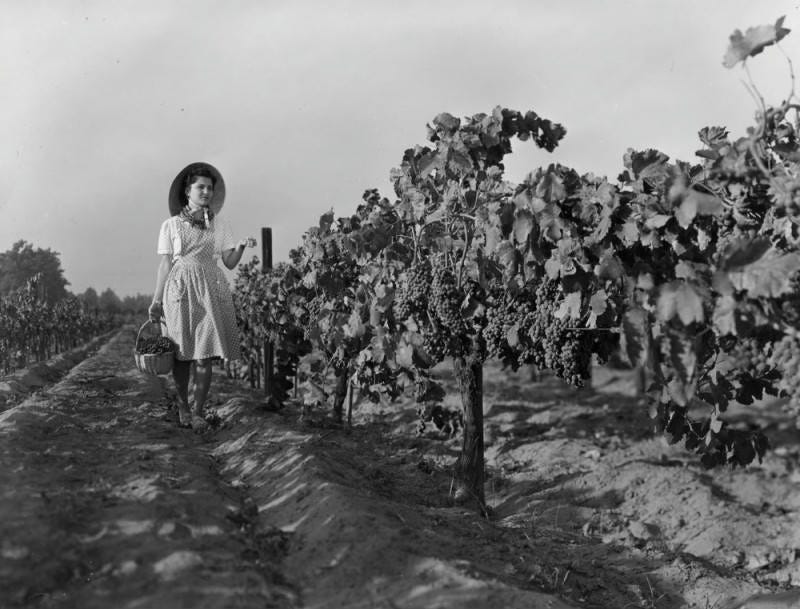
This is not just a history of Southern California wine. It’s the story of how the region’s wine industry, lost and nearly buried by time and development, is resurging — why it matters, who was at the center of it, and what its erasure and return reveal about Southern California itself.

I was fiddling with my phone, not looking for anything in particular, just following the thread that comes from always thinking about wine. Not just the drinking of it, but its history, the ritual, the land, and the people who worked it.
I was born in California. I’ve spent years in wine regions like Sonoma, Napa, San Luis Obispo, Santa Barbara, and Paso Robles watching them thrive and earn their reputations. All the while, wondering about Southern California. Was it too hot, the land too expensive, the freeways too many? Our heritage hasn’t vanished; we’ve just built until the land itself disappeared. After all, it’s hard to plant vines on a freeway.
Yes, there are those — viticulturalists, winemakers, enthusiasts — tinkering away in Temecula, fighting for recognition, working to get their wine onto a 5-star restaurant menu. It’s happening, but slowly. I watched the region transform: dirt roads, almond champagne, open space. Now, each visit brings more vines along Rancho California Road and a new sign: “Temecula Valley, Wine Country.” It’s exciting and a little poignant. Sometimes you have to lose something to gain what you’re after.
With wine on my mind, I decided to search for another set of ancestors who worked in the industry. I already knew about my Bavarian ancestors who were vine-dressers. So, I went looking for more.
And I found them.
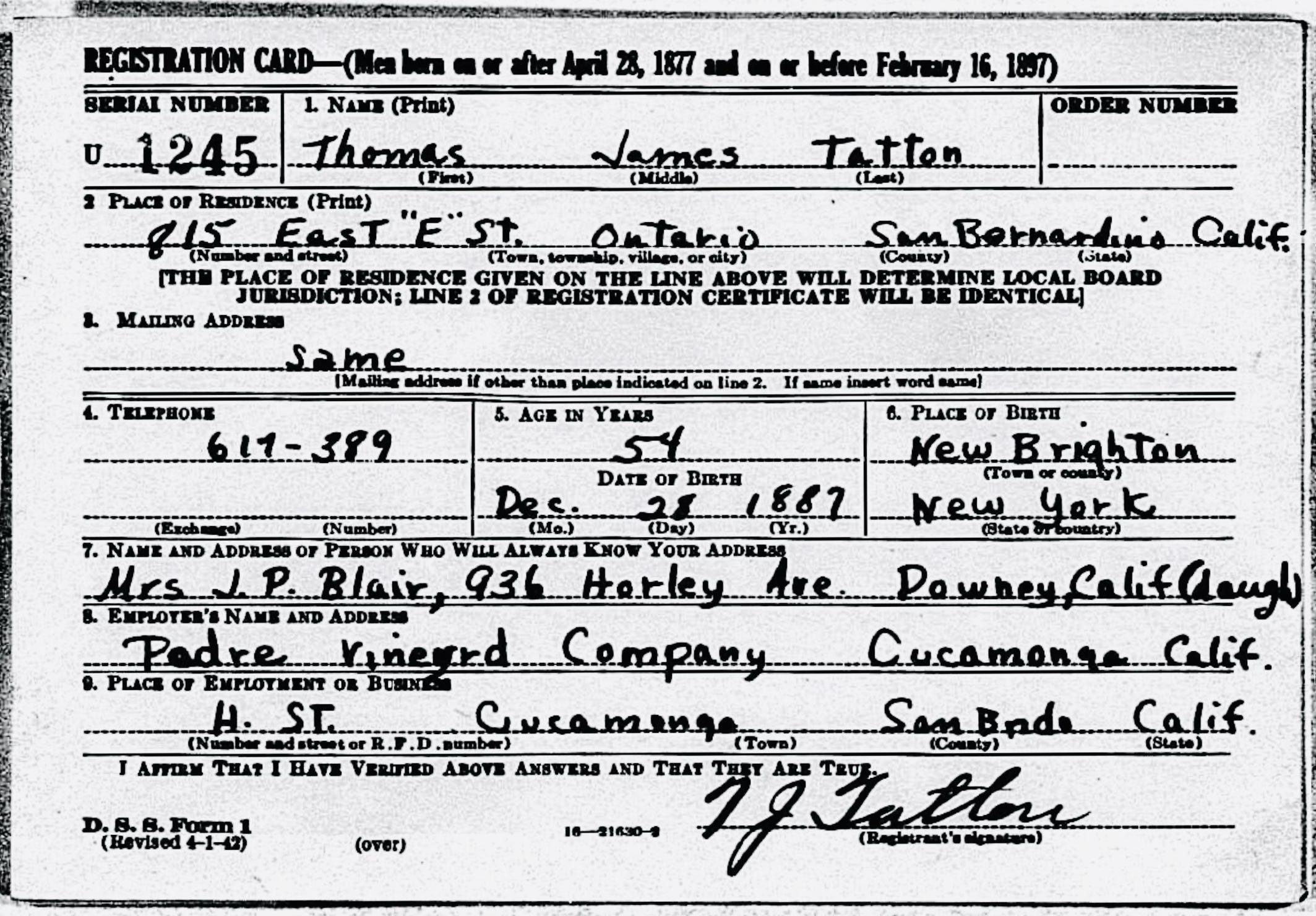
Thomas James Tatton. Carpenter. Ontario, California. Employer: Padre Vineyard Company, Cucamonga, 1942.
I sat with that for a while.
Then I looked at his emergency contact. The person the government asked him to name in the event of a war. Mrs. J.P. Blair. 936 Horley Avenue, Downey, California. His daughter. Which means John Philip Blair, my other great-grandfather, was working in the same industry, in the same region, at the same time. Two great-grandfathers. Family connected by blood and by the vine.
I remember seeing oranges stretch for miles; that’s what Southern California once represented, renowned worldwide. Now, those oranges are mostly gone, and the groves have moved to Central Valley farmland and agricultural areas. Like the vines before them, they were displaced by the same forces: growth, development, and relentless land economics that always place more value on the ground than on what grows from it.
The vines came first. Oranges replaced them. Houses and freeways replaced the oranges. Each generation buries something the previous one built.
This is a story about what survives anyway.
