

The Ritual: An Introduction to the Tables Behind the Ritual
From a Victorian oval room in Indiana to a quiet desert morning — what the tables we grow up around teach us about the ones we set

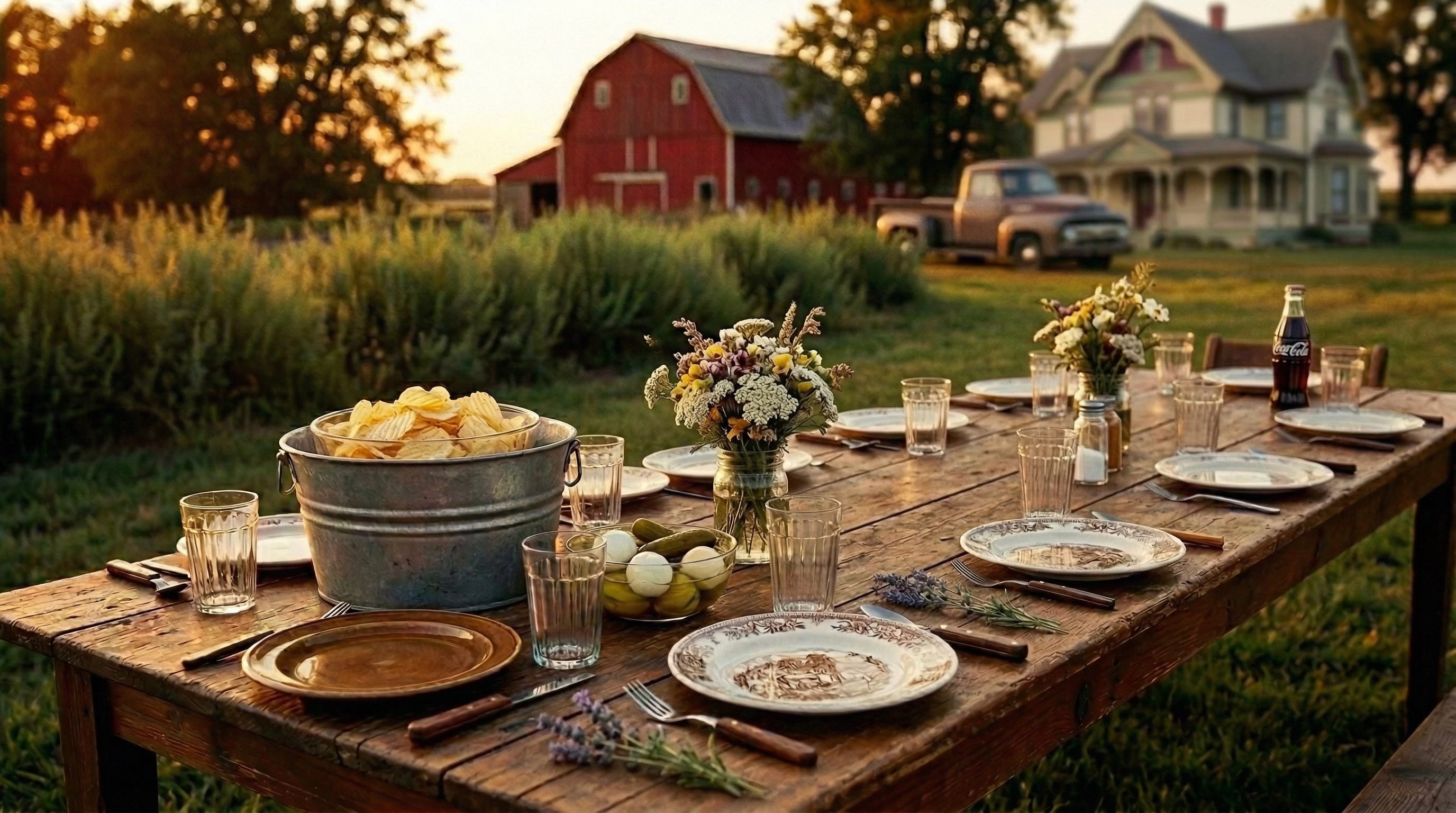
The Ritual is The Dinner Bell's series on intentional living — and it begins at the table.
Every table tells you something about the people who set it.
Not just what they cooked or how they arranged the chairs. The deeper things. What they believed about time. Whether they thought an ordinary Tuesday was worth marking. Whether feeding people felt like a burden or a language. Whether the table was the center of the house or just the place where the mail piled up.
I have been fed at a lot of tables. I’ve been paying attention at most of them.
The first table I remember clearly belonged to my grandmother on my father’s side. A shiny round walnut surface in Anaheim, California, probably not large by any standard but enormous to a small child sitting at it. There were TV trays involved on the bigger nights, the kind that folded out with a satisfying click, and the smell of furniture polish that meant company was coming. She didn’t have a lot, my grandmother, but she gave generously with what she had. For my birthday she made me a cake covered in tiny animals. Giraffes, lions, monkeys, birds, whatever she could find at the store in the late 1960s. I was an animal lover from the beginning. Watched every nature show, read every story. Babar. Pippi Longstocking. Born Free. She knew. The cake was her way of saying so.
When my parents moved to Huntington Beach they bought a house with a proper dining room. Long, shiny walnut, seats six but expands to eight, mirrors lining the walls so the room doubled itself. You could see it from the front door. My little sister used to dance in front of those mirrors. I remember watching her and thinking the room was designed for exactly that, for seeing yourself in the middle of something joyful.
I sat at that table from the time I was seven until I was twenty-eight. It was never just a place to eat. My parents had wonderful friends, the kind who showed up in costume, themed from head to toe, food and drink to match. Chinese nights, Indian nights, American nights, the table transformed each time into something different and completely committed. Our friends were always welcome too. My parents never turned anyone away. The group would gather at that table the way groups gather when a house has decided it’s for exactly that purpose. The dining room connected to the kitchen so nothing ever felt separate. The cooking and the talking and the laughing all ran together, the walls covered in pictures and paintings and crafts my two sisters and I had made over the years. Evidence, everywhere, that this was a house being lived in fully.
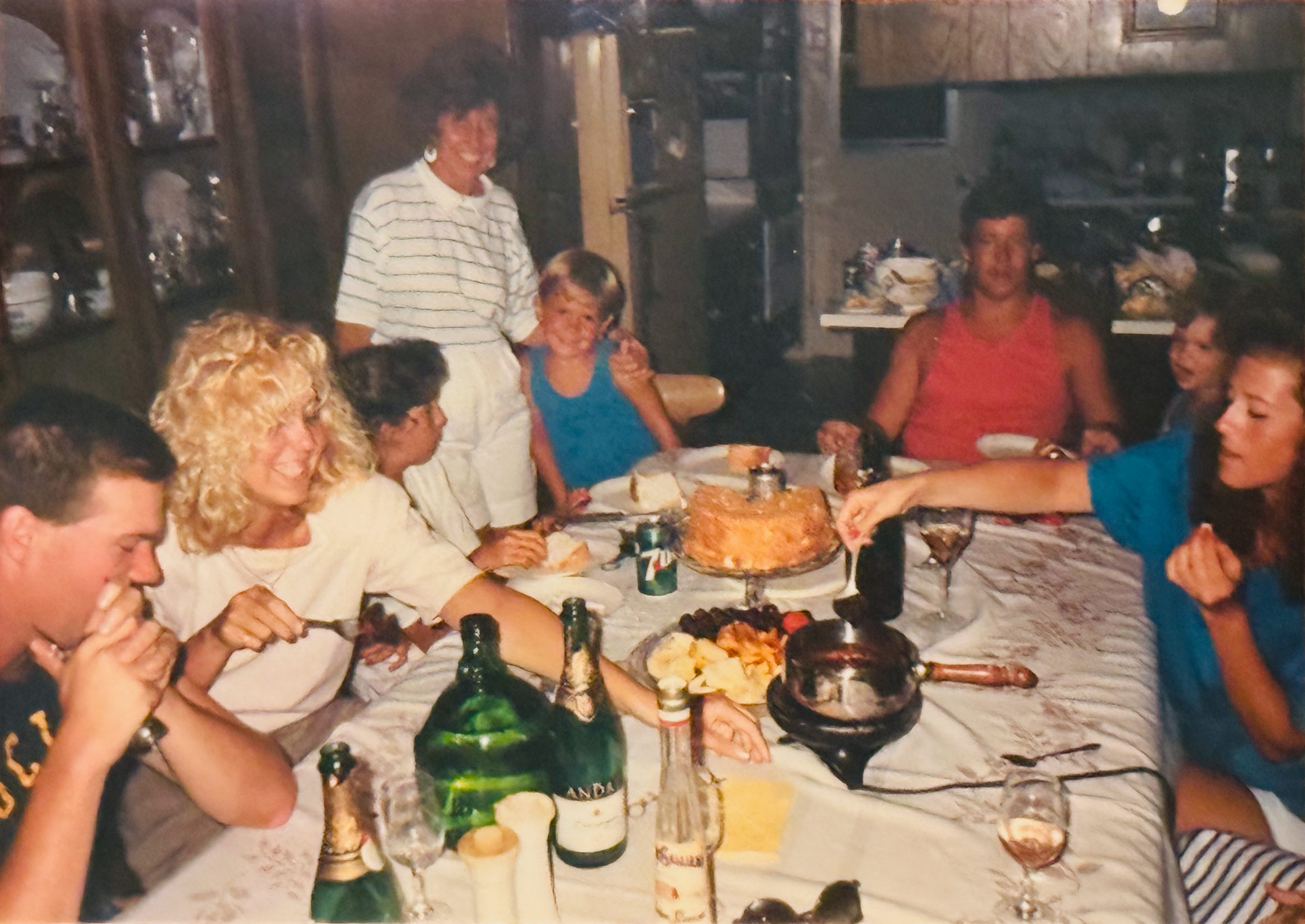
Clara and Jesse Baker’s house was Victorian. Built-in cabinets, hidden cupboards, beautiful woodwork everywhere you looked. Red velvet rugs throughout, held to the stairs by gold stair rods. An oval room. An oblong table. A light overhead that, in my seven-year-old memory, rivaled the Phantom of the Opera. I’ll stand by that description even knowing I was small enough to make everything larger than it was. Some things earn their grandeur.
The table seated twelve or fourteen comfortably. When the whole family came, the food made its first appearance on the sideboard — a beautiful walnut cabinet, shiny and marble-topped, the kind we’d call a sideboard today. Everything passed around and then laid out there, dish by dish, until it was full. When the sideboard couldn’t hold another thing, the food moved to the table itself. The adults sat at the oblong table. The children got their own smaller tables nearby, which at seven years old felt completely official, like being trusted with something important.
If you were small enough and lucky enough and the table wasn’t entirely full of adults, you got to sit at the oblong table itself. That’s where I was when I looked up at that chandelier and decided it was the most magnificent thing I’d ever seen. I was seven. The room was oval and the light was warm and everyone I loved was talking over everyone else. I’ll allow myself that memory.
Jesse would have the radio on. A ballgame, or Glenn Miller drifting through the rooms. The porch and the grass were for drinks and snacks, for standing around, leaning against railings, the particular ease of people who don’t need to be doing anything in particular. Inside, the table was where the real gathering happened. The tall windows had their curtains pulled back to let the summer sun in. Nothing was fancy. Nobody said that word. The side tables held glass bowls filled with candy, the good kind, the kind that meant someone had thought about the children before the children arrived. The wedding cakes Clara made for other people’s most important days were assembled on that same oblong table, stories tall, navigated out the front door by Jesse and whoever he could recruit to help (usually my mom Joy and her sister Linda).
It was the most alive room I’ve ever been in.
The biggest gatherings happened somewhere else entirely. At my Aunt Sally and Uncle Lloyd’s cattle ranch, where the trees were a hundred years old and the barn had a loft tall enough to peer out from the top window and giggle down at the adults below. Ponds, open grass, family arriving from everywhere. Fold-out chairs on the lawn. People eating while standing and talking, or stretched out in the afternoon sun. Kids running through the grass, nobody keeping count of how many there were. My mother had two sisters and two brothers, and they all had children, and there were grandparents and great aunts and great uncles and their families too. On the biggest days it felt like everyone you’d ever loved was somewhere on that property.
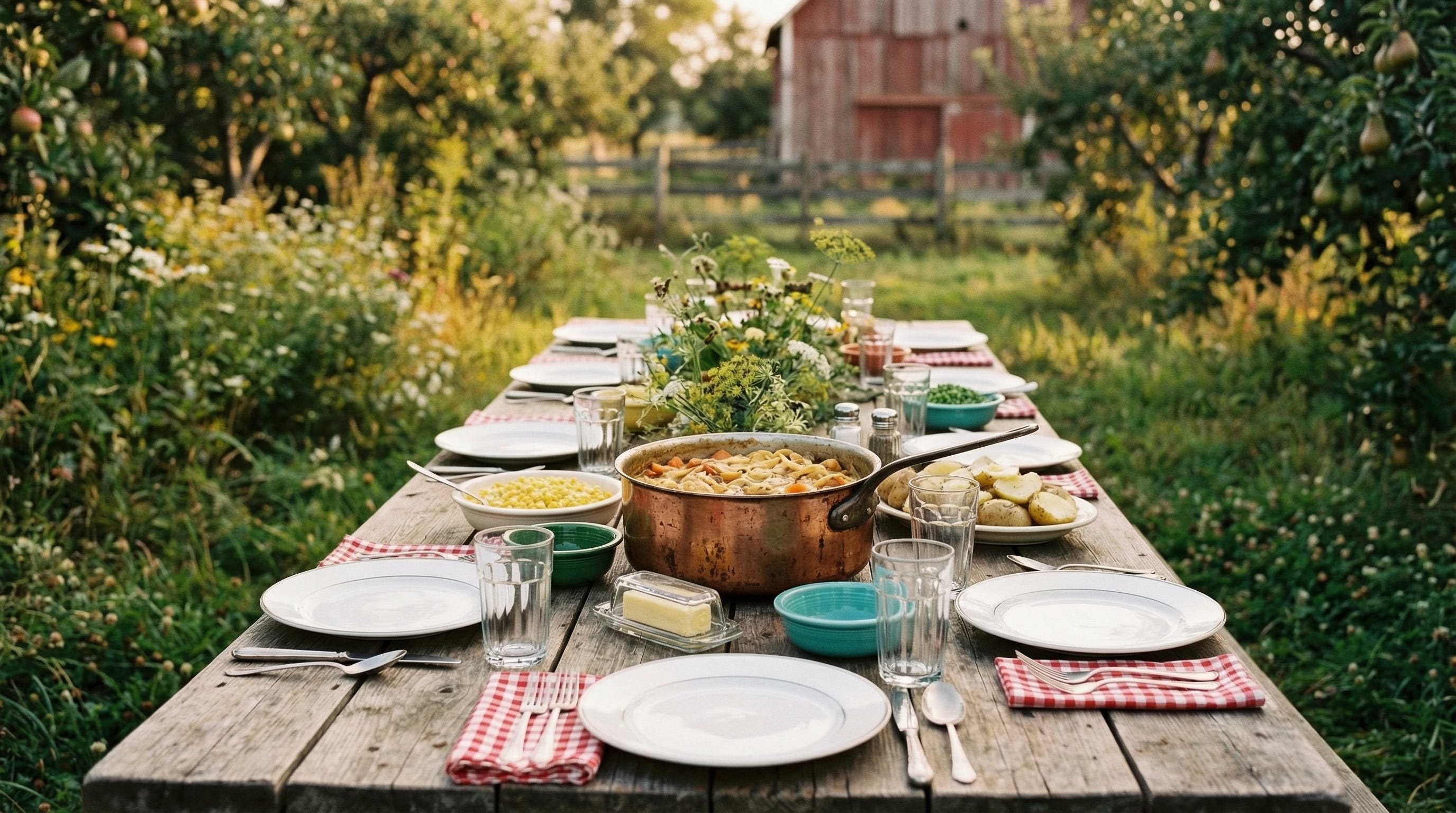
Helen Carnes' table was different. Round and dark and shiny, set in a room of green walls and curtains. Smaller. Quieter. Helen was careful in the way that people who grew up on farms are careful. Nothing came out until it was ready, nothing was set until it was time. Everything from the garden, everything from the earth, nothing wasted. The table a natural extension of the values that ran the house. The candy bowls on the side tables though. Those were always there.
My table now is in the California desert. Crate & Barrel. Sustainable wood, square ends, light to mid-brown, seats four to six. Simple and intentional in the way that things you choose carefully tend to be. It is where I look out the window in the morning at whatever the light is doing to the mountains. It is where I photograph the wine, the recipes, the rituals, where The Dinner Bell comes to life before it lands in your inbox. It is becoming my studio. The place where the work happens and the light is always right.
Quieter than Clara and Jesse’s oval room. It holds fewer people. But it is set with the same intention. The belief that the table is always worth returning to.
This Week’s Pulse: Gather
The tables we grew up around shape the tables we set. I didn’t understand that until I started writing this post, until I traced the line from that oval room in Indiana to this quiet desert morning and realized the intention had traveled with me even when the chandelier hadn’t.
Set your table this week. Even if it’s just for you. Even if it’s just coffee and the morning light. Notice what it feels like to do it on purpose.
The Ledger Entry
Tell me about a table you remember. Not the food necessarily. The room, the people, the feeling of being in it. The tables we carry with us are worth naming. Leave yours in the comments. The Ritual is richer for knowing what shaped you.
Every table tells you something about the people who set it." — this stopped me. I've been sitting with exactly this idea: that what a ritual transmits isn't just memory or tradition, but positions. Who sits where, who does what, who says the same thing every year without deciding to. The table is where those roles form and hold. Your framing of intentional gathering gets at something I think most people feel but never name. Really looking forward to where this series goes.
With Easter just around the corner and large family gatherings, your post is perfectly timed, reminding us that as we all come together around the table, even a small, quiet one can carry the weight and warmth of generations.